Know what to expect before you ride.
- Product Strategy
- Product Design
- UI/UX
- Systems Design
- Next.js
- TypeScript
- Testing
- AI-Assisted Development

Weather changes along the way. Your forecast should too.
Helmet Ready brings a route, expected timing, and forecast conditions together in one Ride Plan. It is a Planning Aid for understanding what the weather may be like along a motorcycle journey before departure—not navigation, a safety approval, or an AI product. The product is now live as a Public Release at helmetready.com; this Case Study makes no claim of validated outcomes.
Visit Helmet Ready01 / The Weekend Ride Problem
A destination forecast cannot explain the weather between here and there.
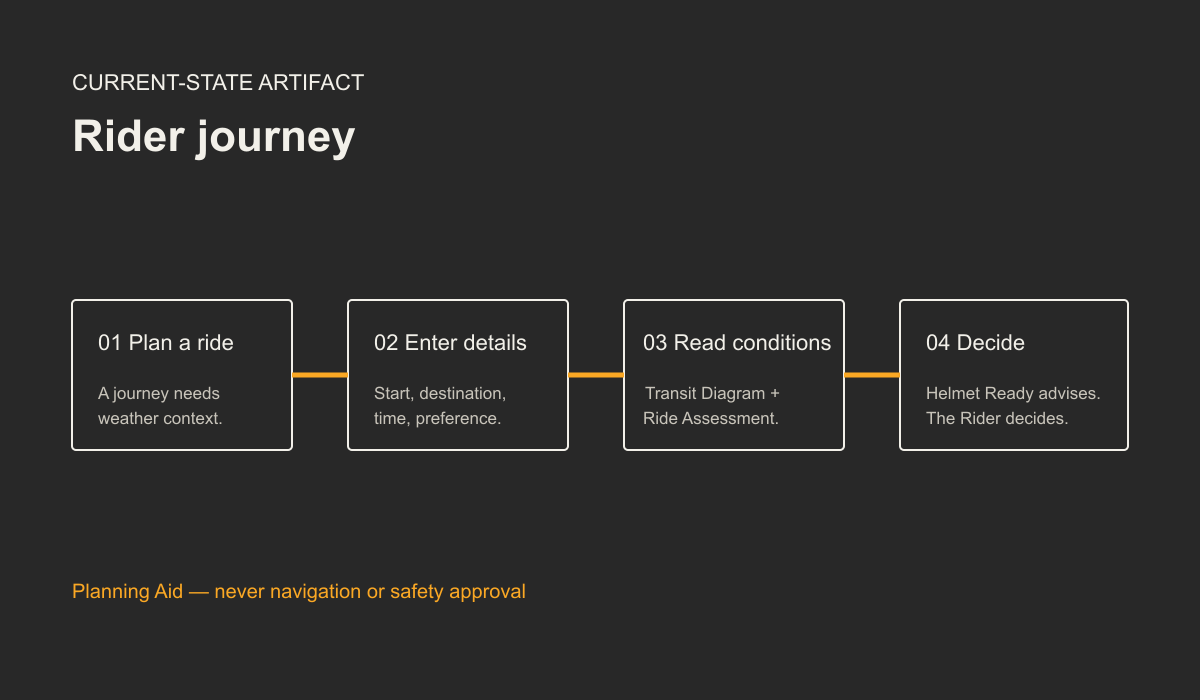
Weekend rides cross towns, elevations, and changing conditions. Checking a route in one service and weather in another leaves the Rider to estimate when each forecast applies. Helmet Ready began with a simpler product question: what if the forecast followed the journey? The intended promise is direct—know what to expect before you ride—while the final decision remains with the Rider.
02 / Turning Route and Forecast into a Ride Plan
Four inputs become one weather-focused view of the ride ahead.
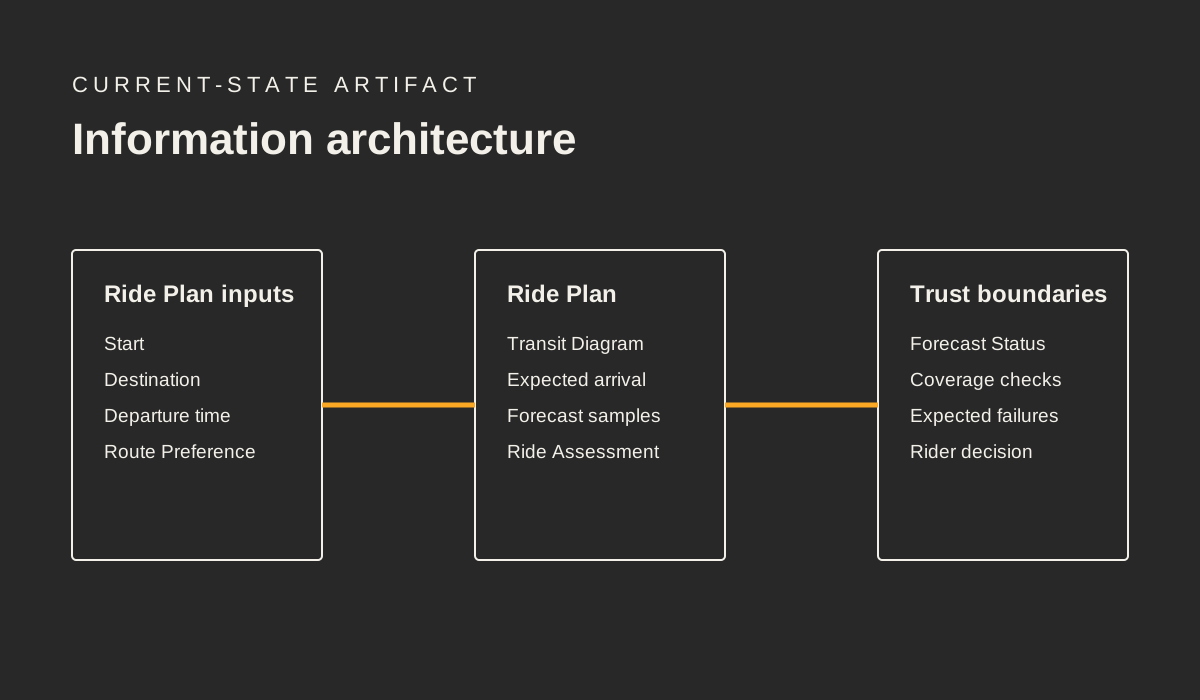
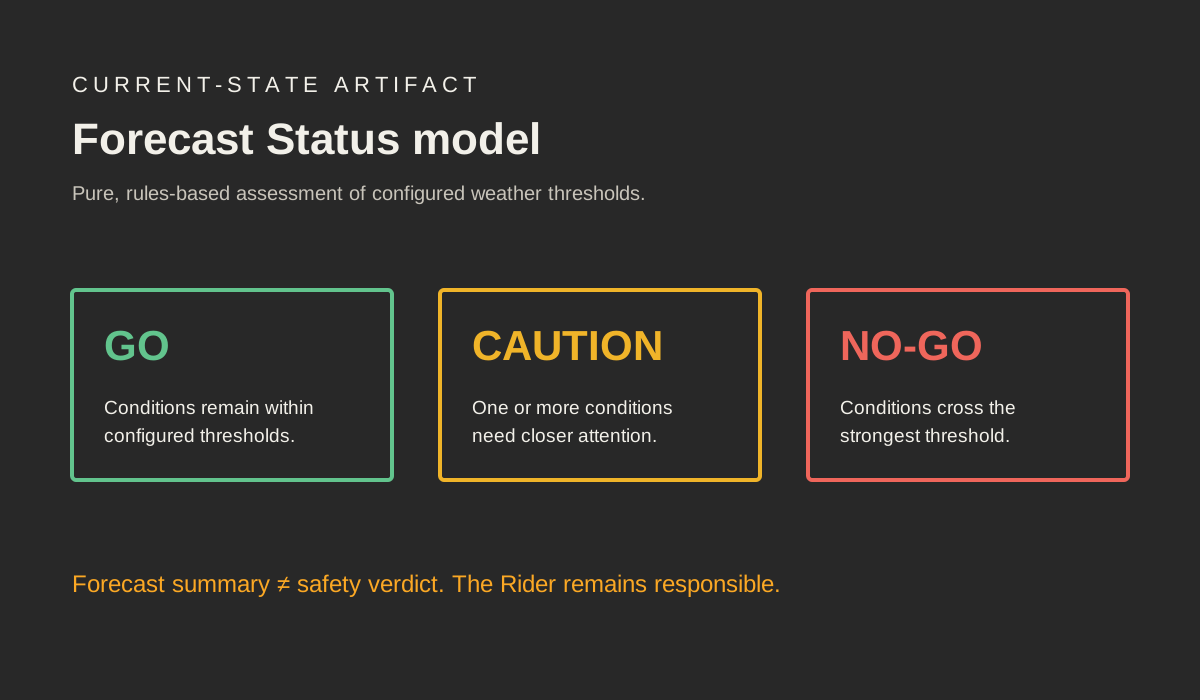
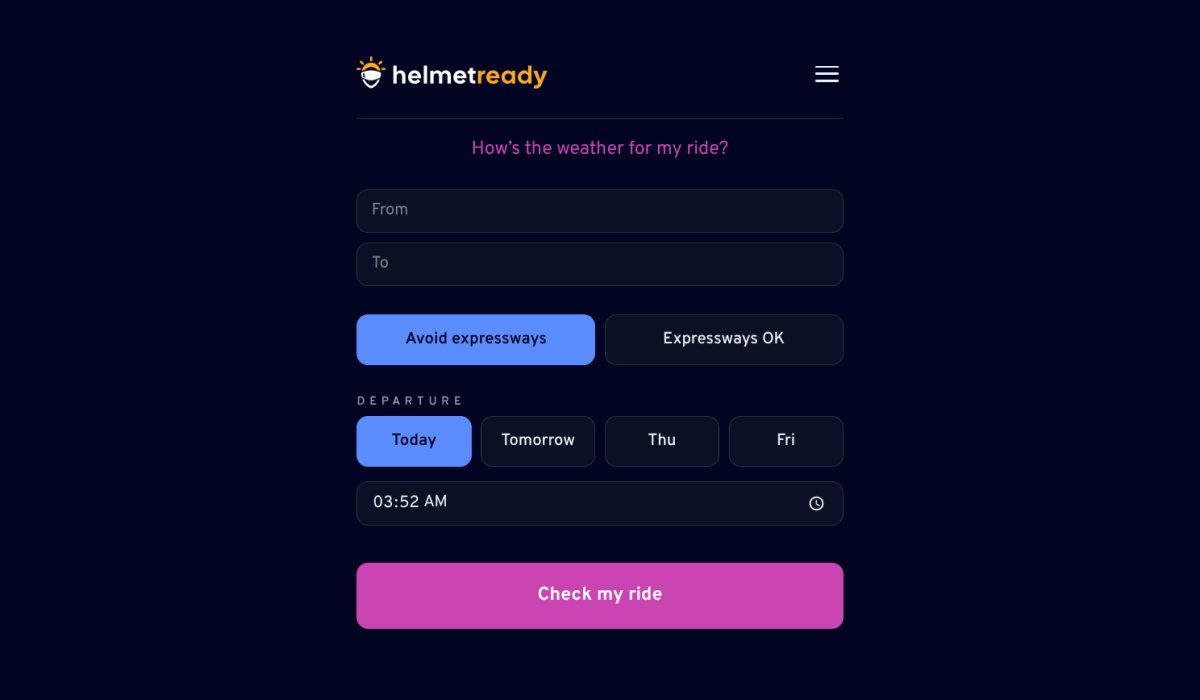
The Rider enters a start, destination, departure time, and Route Preference. Helmet Ready estimates progress along the route, matches forecast samples to expected arrival times, and organizes the result as a Ride Assessment. GO, CAUTION, and NO-GO are Forecast Status values derived from transparent weather thresholds. They summarize forecast conditions; they never grant permission to ride or guarantee safety.
03 / Designing the Transit Diagram
Journey sequence matters more than geographic shape.
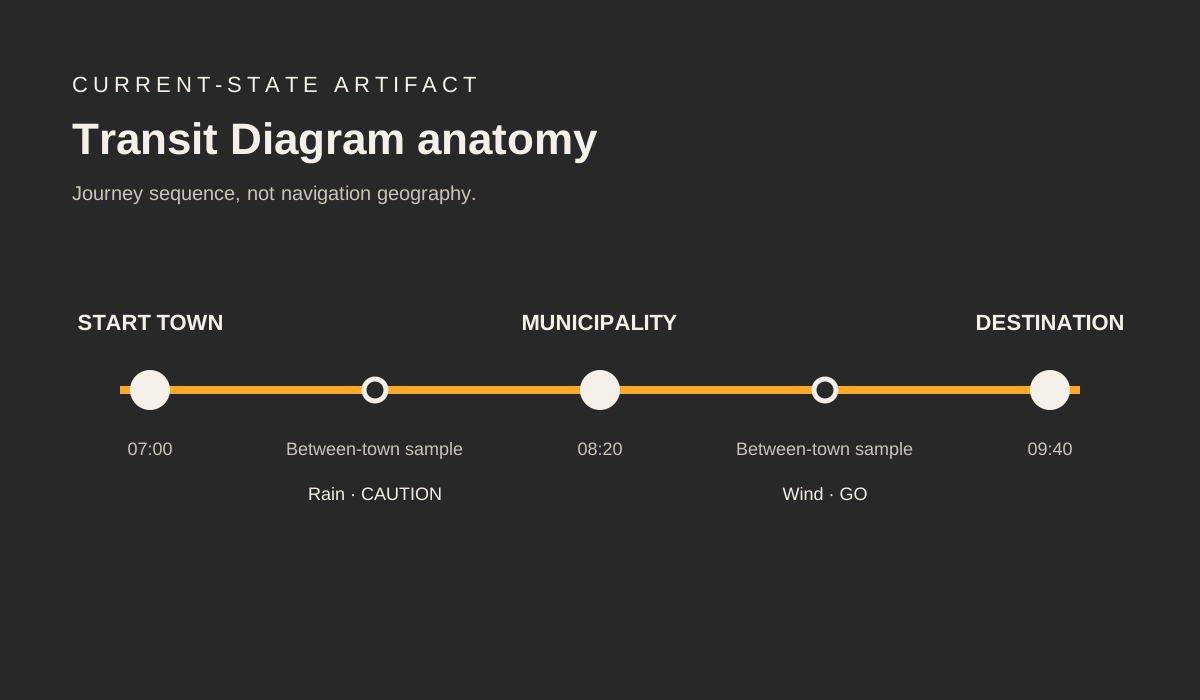
A conventional map emphasizes roads and turns, but Helmet Ready is not a navigation product. Its Transit Diagram arranges municipalities by journey sequence and places forecast samples—including between-town points—where changing conditions are expected. That makes route position, expected arrival, and weather legible in one scan without pretending that clear weather at a named town covers the road around it.
04 / Defining Honest Routing Boundaries
Routing constraints are product requirements, not edge cases.
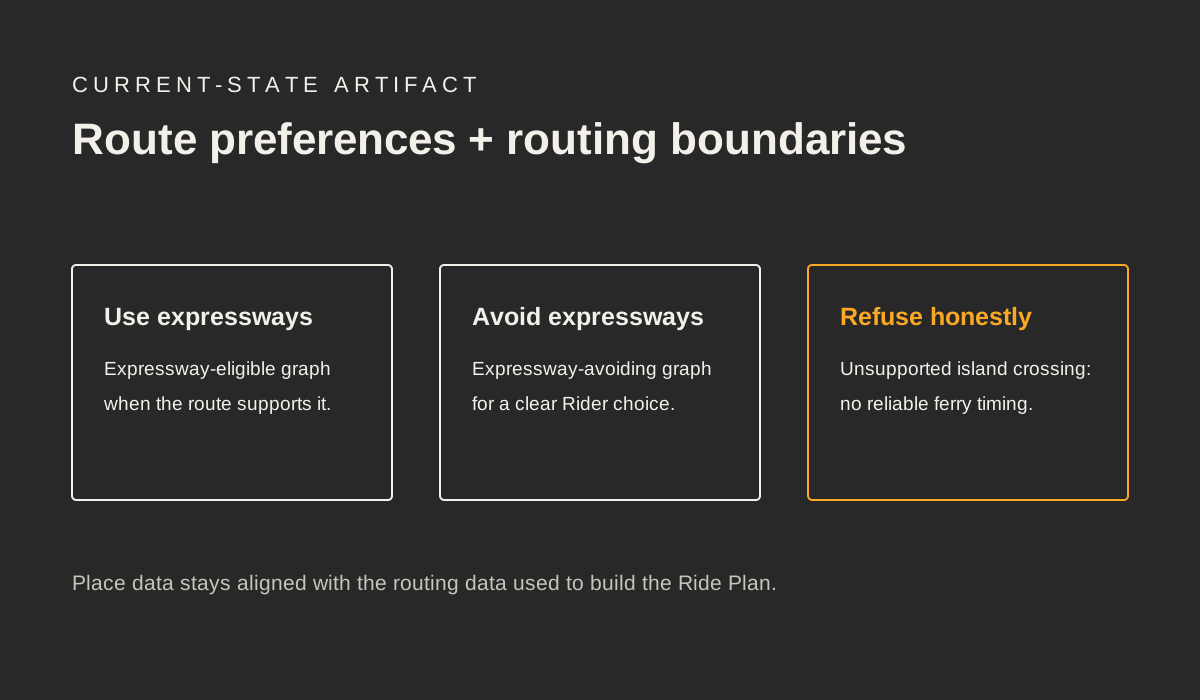
Separate expressway-eligible and expressway-avoiding routing graphs support a clear Route Preference without burdening Riders with engine terminology. Place data is aligned with the routing data. Journeys that require an unsupported island crossing are refused honestly because ferry routing and dependable arrival estimates are not yet represented. The product purpose stays bounded to Pre-Ride Weather Planning—not traffic, hazards, live tracking, social riding, or turn-by-turn navigation.
05 / Engineering for Trust
Trust comes from complete coverage, transparent rules, and honest failure.
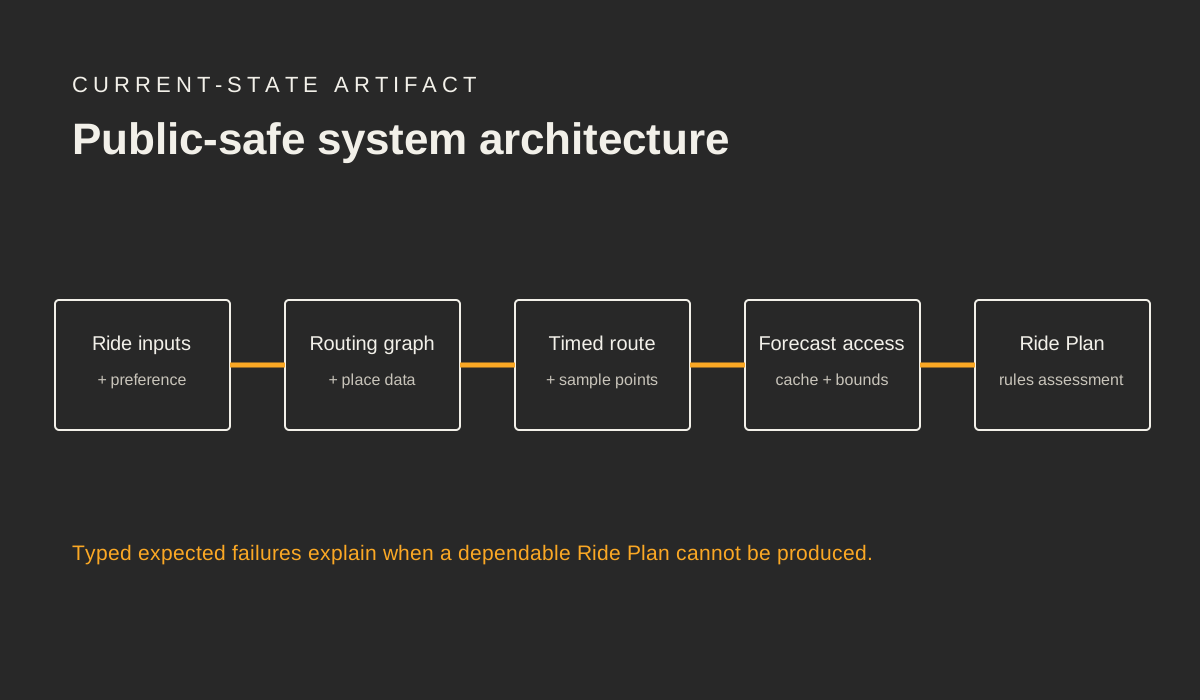
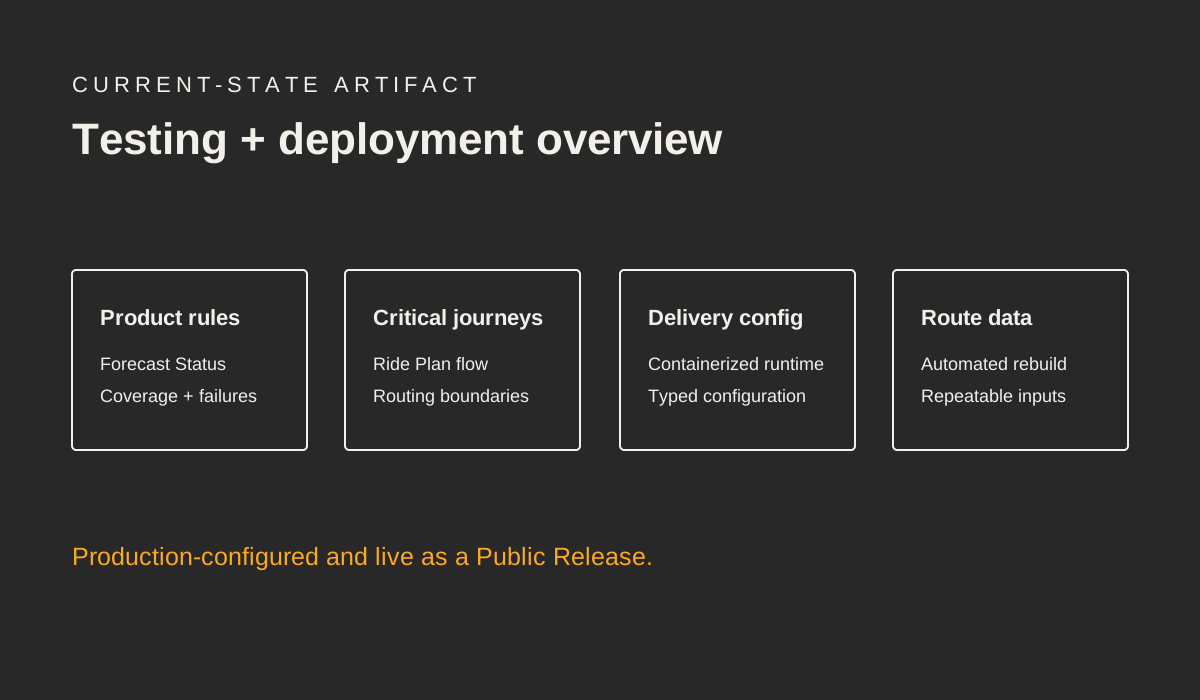
Along-route forecast sampling is evaluated by a pure rules-based assessment, not generated by AI. Cache-backed forecast access and bounded concurrency keep external requests controlled; typed expected failures let the interface explain when a dependable Ride Plan cannot be produced. Testing covers the product rules and critical journeys. Containerized deployment configuration and automated route-data rebuilding support the live Public Release. Helmet Ready remains a Planning Aid, and the Rider remains responsible for every ride decision.
06 / From Idea to Public Release with Claude Code
AI accelerated production; product judgment stayed human.
Claude Code was the primary delivery assistant, with Codex used only as a continuity fallback. Product direction, interaction decisions, evaluation, correction, and accountability remained with the creator. This Design-to-Engineering Continuity carried decisions directly into components, rules, tests, and the Public Release without a conventional handoff. Helmet Ready is not an AI product. It is an AI-assisted product-design and engineering process now open to genuine post-launch Rider feedback about whether the Ride Assessment is understood and whether along-route weather improves planning.